
Sony's 5 Weirdest Creations Ever
A deep dive into Sony's most eccentric and experimental products, exploring why a global electronics giant sometimes decided to make things nobody asked for.

The Cyber-Dog That Nobody Needed
The Cyber-Dog That Nobody Needed
In 1999, Sony released AIBO—a robot dog that cost around £2,000 and did basically nothing except wag its tail, bark, and occasionally recognise your face. It wasn't a real dog. It couldn't fetch. It couldn't protect your house. What it could do was sit in your living room looking vaguely robotic while you explained to visitors why you'd spent serious money on a plastic pet. But here's the thing: AIBO actually became a cult object. People genuinely bonded with them. When Sony discontinued the line in 2006, owners held funeral services for their mechanical companions. The company eventually brought AIBO back because there was actual demand—proof that sometimes the weirdest ideas tap into something real about human nature. Just because something's pointless doesn't mean it won't find an audience.

The Camera That Thought Floppy Discs Were the Future
The Camera That Thought Floppy Discs Were the Future
In 1995, Sony released the Cyber-shot, which was genuinely innovative—it was one of the first digital cameras to hit the consumer market. But here's where it gets weird: they stored images on floppy discs. A 3.5-inch floppy disc. Which held about 1.44MB of data. Which meant you could fit roughly two photos on one disc before needing another. Imagine being on holiday and having to carry a stack of floppy discs like you're a 1980s office worker. The Cyber-shot was technically ahead of its time, but the storage solution was hilariously backwards-looking. Within a couple of years, memory cards arrived and made the whole thing obsolete. It's a perfect example of Sony betting on the wrong format—a habit they'd repeat several times over the decades.
The MiniDisc: A Format War They Actually Lost
The MiniDisc: A Format War They Actually Lost
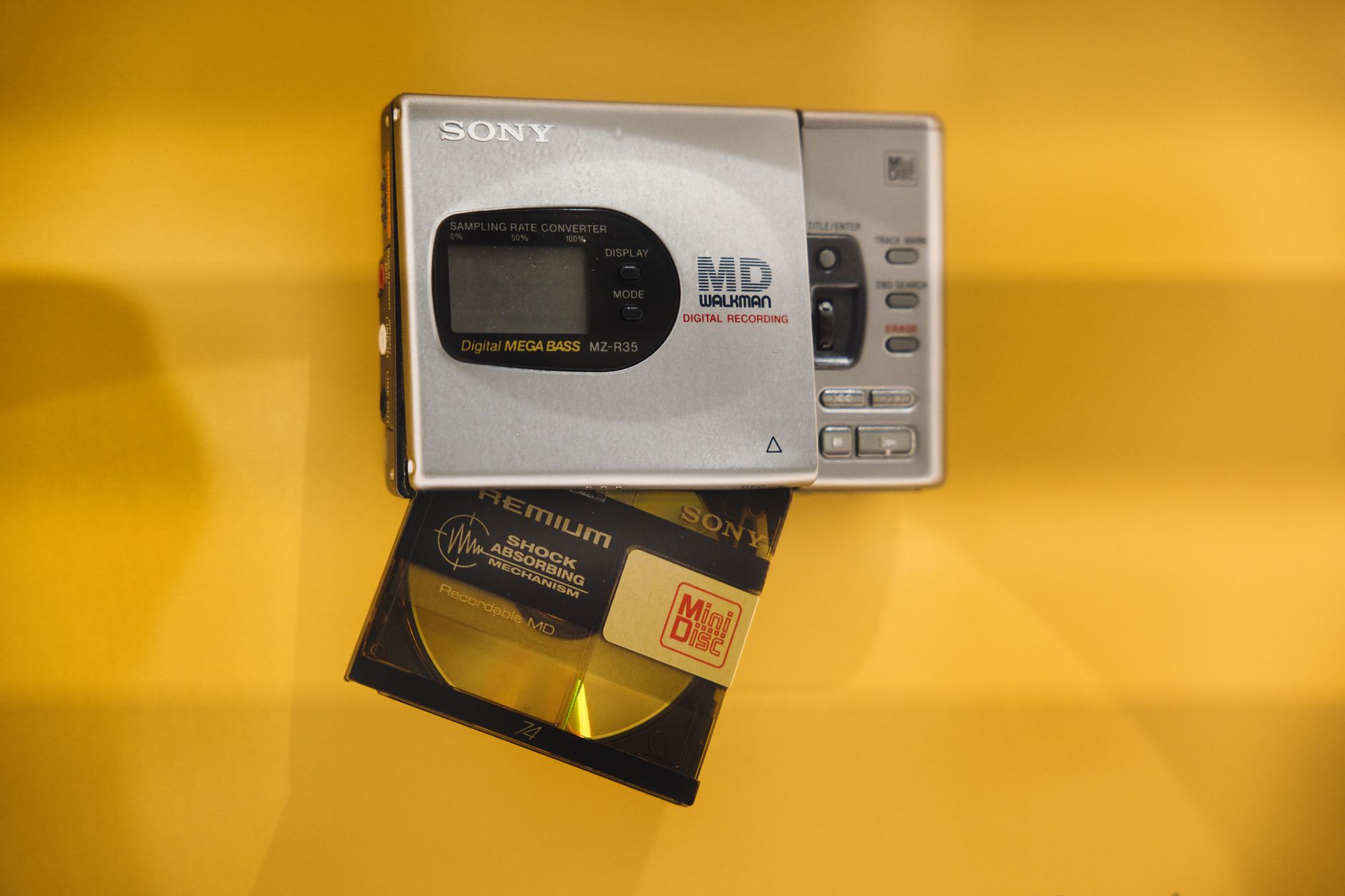
MiniDisc was Sony's answer to the MP3 player, except it came out at exactly the wrong moment and was technically more complicated than necessary. Released in 1992, it promised high-quality audio on tiny rewritable discs. In theory, brilliant. In practice, it was expensive, the players were chunky, and by the time MiniDisc got good, the iPod arrived and made everything else look ancient. What's wild is how long Sony pushed MiniDisc. They kept releasing new players, new features, new marketing campaigns—all while the format was slowly dying. It wasn't until the mid-2000s that they finally admitted defeat. The whole saga is basically Sony refusing to believe that their proprietary format wouldn't dominate the market, a lesson they apparently needed to learn multiple times.

The Rolly: A Robot That Danced to Your Music
The Rolly: A Robot That Danced to Your Music
In 2004, Sony released Rolly—a cylindrical robot that would roll around your room and dance to whatever music was playing. It had speakers built in, a gyroscopic system to keep it balanced, and an almost aggressive amount of personality for a device that literally just moved side to side. The Rolly cost around £200 and served absolutely no practical purpose. It didn't clean your floors. It didn't play music better than a regular speaker. It just... danced. And yet, it's oddly charming in retrospect. There's something refreshingly honest about a company making a product that's purely about joy and weirdness, with no pretence of utility. It's the kind of thing that could only come from a company confident enough to fail in public.

The Qualia: Luxury Tech for People With Too Much Money
The Qualia: Luxury Tech for People With Too Much Money
Sony's Qualia line was their attempt at ultra-premium consumer electronics—think £15,000 televisions and £3,000 headphones. The idea was that by charging absurd prices and limiting availability, they could position Qualia as luxury goods rather than just expensive gadgets. The problem: most of it wasn't actually better than cheaper alternatives. A £15,000 TV doesn't make you happier than a £2,000 one. The Qualia headphones were excellent, but not £3,000-better than competitors. Sony eventually killed the line because, shockingly, people didn't want to pay luxury prices for tech that depreciated rapidly. It was a fascinating experiment in whether brand prestige alone could justify the markup. Spoiler: it couldn't.
Why Sony Keeps Making Weird Stuff
Why Sony Keeps Making Weird Stuff
The pattern here is clear: Sony is willing to experiment in ways that most tech companies aren't. They've got the resources to fail, the engineering talent to make almost anything, and apparently a corporate culture that occasionally says 'let's just make something strange and see what happens.' Some of these products were ahead of their time. Some were just bad ideas. But they all reveal something interesting about innovation: sometimes the weird stuff teaches you more than the hits. AIBO led to advances in robotics and AI. The Cyber-shot, despite its floppy disc nonsense, helped establish digital photography as mainstream. Even the failures gave Sony valuable data about what consumers actually wanted. In an era where most tech companies play it safe, there's something oddly respectable about a company willing to be publicly strange. Whether you think that's admirable or ridiculous probably depends on whether you owned any of these things.
Related reads